

2007 / Akiva Schaffer > The Lonely Island boys may have made quite a name for themselves with SNL’s “Lazy Sunday” and “Dick in a Box,” but Hot Rod, while a project of love, falls flat soon after take-off. The jokes constantly overstay their welcome and feel like they’re targeted for an elementary school demographic. By the end, though, there’re some heart-tugging moments, no matter how manufactured, that make you think, “Alright, so not an absolute total waste of time. Just mostly.”
Category Archives: United States/Canada
P2
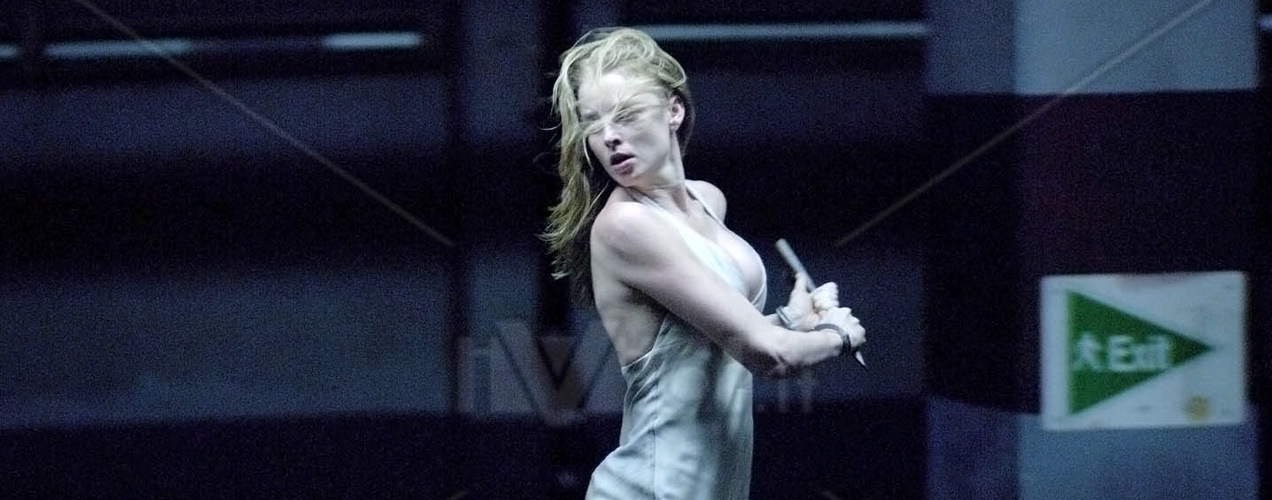
2007 / Franck Khalfoun > The pre-eminent display of Rachel Nichols’ cleavage throughout P2 is undoubtedly the highlight of what is otherwise an instantly forgettable psychopath/horror attachment to popcorn written by the director of the much-acclaimed High Tension. But aside from all that, one has to wonder about Wes Bentley. Is this where all the fame and glory of American Beauty leads? There’s no way he could have found something beautiful in this.

No Reservations
2007 / Scott Hicks > Due to its bleaker foundation, No Reservations is calmer and more contemplative than most romantic comedies. It tries for poignancy without ever being able to achieve the emotions it wishes for. Thankfully, the cast and music (done aptly by Philip Glass) carries it past its testing and often predictable story. I doubt memories of the film will linger for long, but the feeling is nice while it lasts.

Shrek the Third
2007 / Chris Miller & Raman Hui > Almost every negative thing I can think of about Hollywood is somehow summed up in this film. Not only does Shrek the Third lack the freshness of the original and the tongue-in-cheek nature of the sequel, but it tries to justify its amalgamation of refuse with a lesson in being yourself. Unfortunately, $800 million in worldwide box office receipts will do little to dissuade the studios from such idiocy. Instead, here comes Shrek Goes Fourth!

Trade
2007 / Marco Kreuzpaintner > Trade may just be this year’s biggest missed opportunity, overshooting any chance of credibility with its amateur, aggrandized screenplay. Because the subject of sex trafficking is misunderstood in both its scope and prevalence, Kreuzpaintner and screenwriter Jose Rivera’s attempt to bring it onto the mainstream is admirable, but ends up being frustrating in its execution. While the cinematography and score are superb, the writing that surrounds it is vapid and cliche. (This worries me terribly since Rivera is in charge of scripting the American remake of the superb Korean drama Failan.) The excess in the storytelling particularly disappoints, taking away the focus from the true horror of the industry while emphasizing the superfluous. Ultimately, I wanted to like it but couldn’t; I found myself too angry at its silliness and disrespect for the subject matter.
3:10 to Yuma
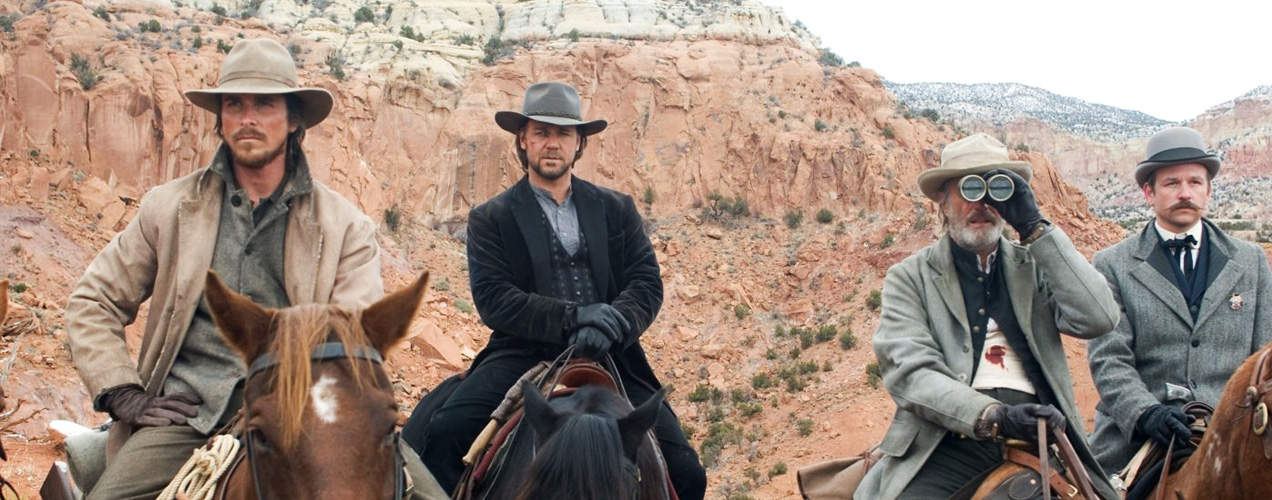
2007 / James Mangold > This retelling of 3:10 to Yuma is neither fresh nor does it take any risks. Using a conservative approach, the centerpieces effectively become Crowe and Bale, who, for a couple of foreigners, sure play the role of tough, Western men quite well. In my experience, there’s just something about Mangold’s style that cheapens the emotional plight of his characters. This, though, is not nearly as bad as Walk the Line, partially because the film pacing’s keeps our attention on the action. By the end, 3:10 to Yuma turns out to be a solid effort, even if it comes nowhere near the potential of its foundation.

Planet Terror
2007 / Robert Rodriguez > Planet Terror dangerously treads the middle ground between being a genre film and a mainstream movie. In doing so, it fails to gain proper traction to exploit either end of the spectrum and fully realize its potential. While Tarantino’s Death Proof has higher highs and lower lows, Rodriguez’s constant barrage of zombie action never really gathers enough steam to hold one’s attention. Without many surprises—unless you count Rose McGowan’s M41A assault rifle for a leg, the highlight of the show that comes arguably too late—Planet Terror is ultimately too indulgent to be successful.

Death Proof
2007 / Quentin Tarantino > In Pulp Fiction, Tarantino’s dialogue was fresh and exciting, but more importantly, it led to some level of character development that helped us understand the chaotic world within. In Death Proof, however, he engorges himself in dialogue that does little but waste time. Some may find it clever, but mostly it comes off pretentious and unnecessary. Thankfully, his skill in creating suspenseful action comes through gloriously in a couple of sequences that essentially justify the whole film. It’s no wonder that this was cut and packaged together with Planet Terror in North American theatres: The meat here, while thin, is still quite juicy.

Michael Clayton
2007 / Tony Gilroy > Michael Clayton is easy to like: Other than its somewhat long running-time and debatable ending, Gilroy’s directorial debut is void of any crass errors. George Clooney puts forth another intelligent performance that keeps him atop the top tier of Hollywood actors, but Tom Wilkinson ends up outshining him in a part that ought to get him an Oscar nomination at the very least. With its issues of corporate negligence and capitalist morality, the film is contemporary yet fresh. Its approach is akin to a lighter version of The Insider that’s better fit for the masses—there’s just enough action and craziness within to keep it riveting to those without an attention span. This all works well, but what trips the complete product is that it’s just too well packaged by the time the credits roll. But while there’s not much to hold onto past the two hours of celluloid, it must be said that this is one of the finest efforts major Hollywood has put forth in quite a while.

Eastern Promises
2007 / David Cronenberg > If there’s one thing that Cronenberg’s always done and deserves the most praise for, it’s the respect and intelligence with which he treats his audience. Hints are dropped, arcs are drawn but most of the dots are ultimately connected by the viewer. More often than not, this technique works wonders (e.g., Crash and eXistenZ). In Eastern Promises, this technique is further refined to the point where it actually backfires a little: Considering the strength of Viggo Mortensen’s character and the underlying tension/mystery that develops throughout, the finale is anticlimactic and disappointingly flaccid. The credits brought forth no emotions in me, a fact I found disheartening after 100 minutes of stellar filmmaking. In The History of Violence, there was an emotional purge at the end that left me at peace, but here that was absent. It’s simply too clever, and I can only wish that he had added a few more minutes to extrapolate the ongoings—not for the purposes of holding my hand, but in order to find a foundation to rest the violence and stereotypes by which the film operates.