
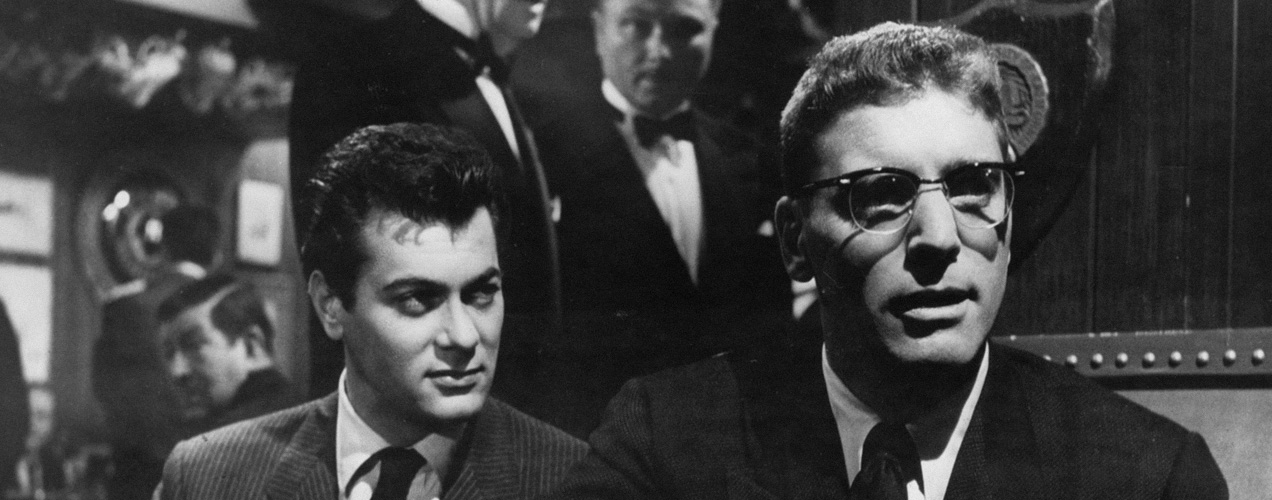
1957 / Alexander Mackendrick > Sweet Smell of Success is as dark and biting now as it must have been in its heyday. Burt Lancaster’s performance as a ruthless society columnist is second only to Tony Curtis’ mercurial, almost repulsive role as the public relations agent in constant need of dire favors. It’s always interesting to see a film from half a century ago and think that the world hasn’t changed much. While we all imagine a nice, quiet place pre-Internet, films like this are kind enough to show that people are always the same, and that it’s just their surroundings that change as time goes on.
Category Archives: United States/Canada
The Simpsons Movie
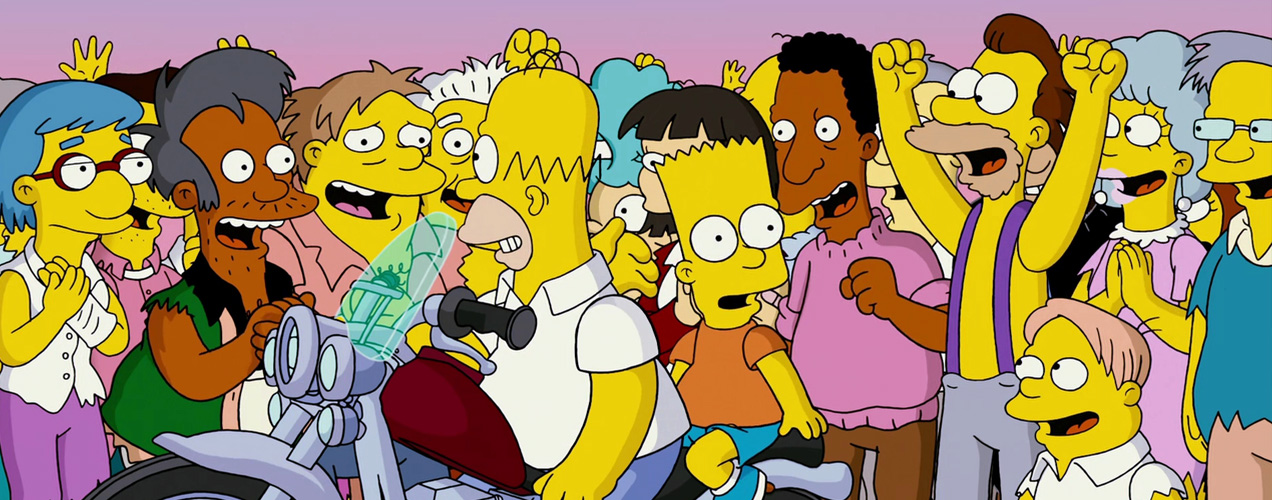
2007 / David Silverman > Truth be told, there wasn’t much that could’ve been done to fully satisfy me here. Wherein South Park: Bigger Longer & Uncut delivered what its title promised, The Simpsons Movie essentially failed in sufficiently going beyond the boundaries of what television could already provide. It’s incredibly enjoyable, but not enough to keep it decisively memorable and separate from its broadcast brethren. (Bart’s penis can barely hold a candle to the brilliance of “Uncle Fucka.”) But it’s The Simpsons Movie, and we’ve waited eighteen damn years for it. My expectations were high, sure, but it’s still a grand showing. I think I even teared a little when the videotape played.
The Lookout
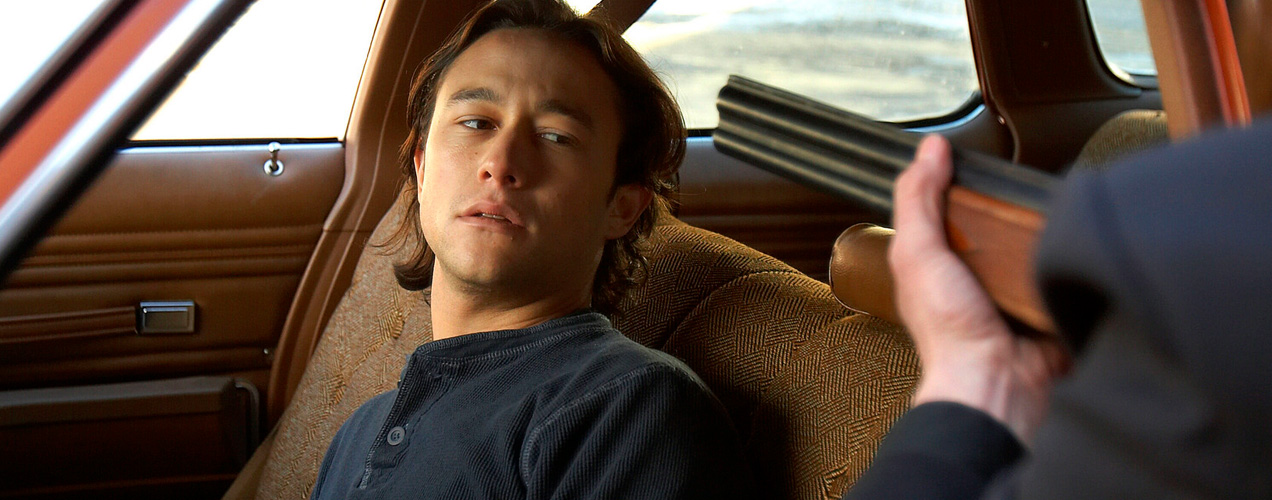
2007 / Scott Frank > At a basic level, it’s hard not to respect The Lookout for its relatively unique take on the heist genre. The film’s move away from the standard setup theme is of interest, but the execution is sometimes flawed with staccato pacing and peripheral characters that come across extremely two-dimensional. Moreover, the gimmick of memory disorientation is utilized in a somewhat predictable way, even if the final sequence is a rather impressive one.
1408
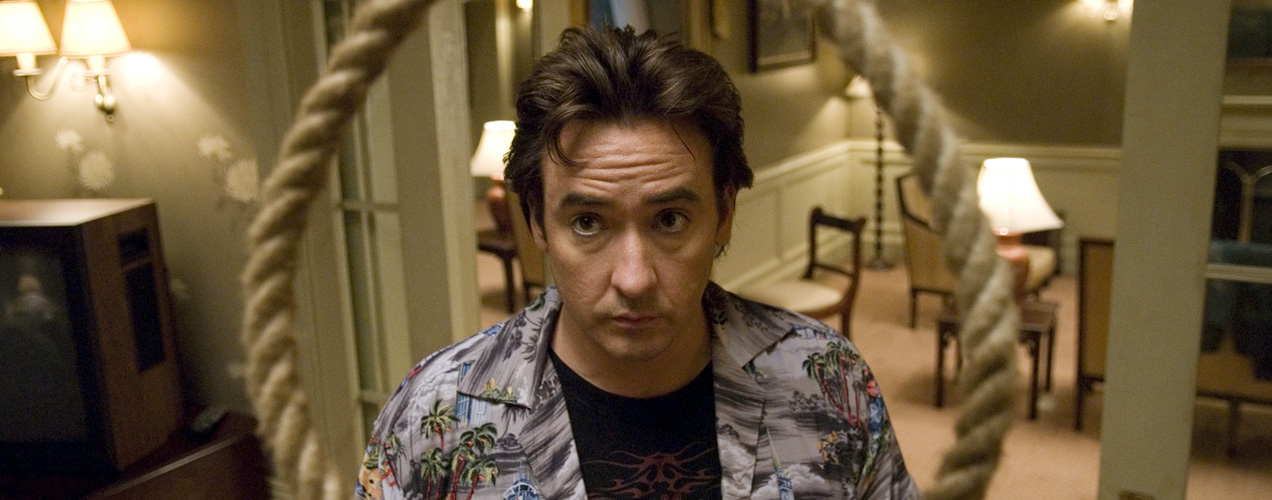
2007 / Mikael Hafstrom > It pains me to say that the payoff in 1408 didn’t suffice, because it’s definitely a well-crafted psychological horror with none of the childish tactics of the latter two Saw films. Hafstrom has skill as a director (noted in both Derailed and Evil), but these scripts just don’t do him justice. Or maybe I’m overestimating his ability past the pure technical aspect. Either way, Cusack’s presence made the film bearable for me even if the end didn’t equate.
Harry Potter and the Order of the Phoenix
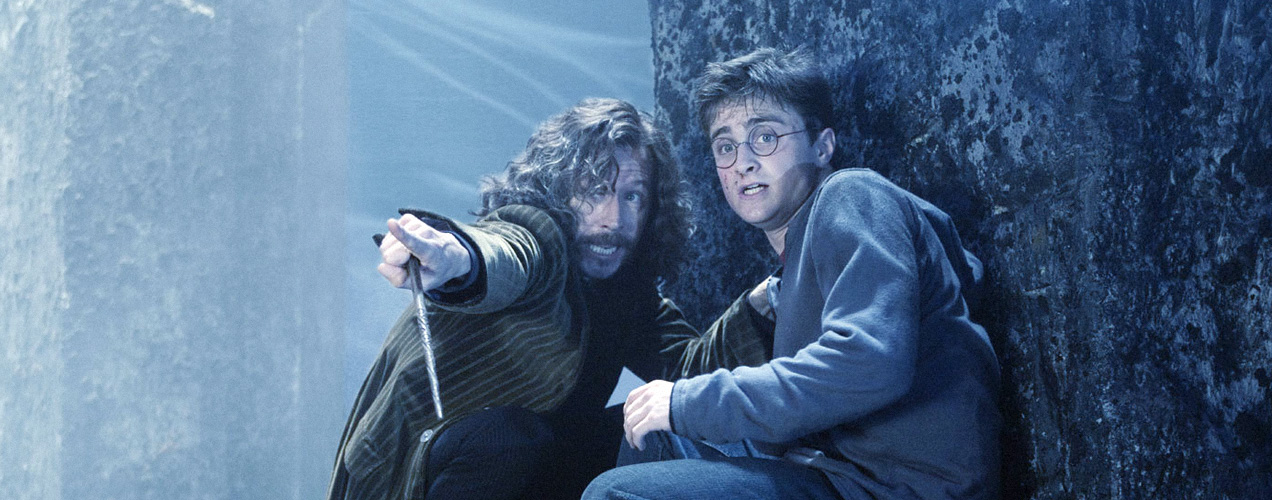
2007 / David Yates > I’m not a Harry Potter fanatic by any stretch of the imagination (i.e., I haven’t read the books), so I find watching these films an idle form of entertainment. In such, it’s hard for me to get riled up over them without understanding their long, literate histories (unlike my child-like giddiness towards Transformers). With Harry Potter and the Order of the Phoenix, I do feel like I’ve missed out on a lot of the meat by not having read the books (and not refreshing my memories of the last four), but I did come out of the theatre feeling quite comfortable about Yates taking Harry into maturity.
The darkened atmosphere surrounding Harry is quite welcoming to the sense of the world’s impending battle between good and evil. Dolores Umbridge as well as Luna Lovegood add some fresh spices to the character pool, an act that Cho Chang (and that sad, pathetic kiss) absolutely fails at. Fundamentally, it’s not always even or even coherent to us non-readers, and admittedly I did feel by the end that not much had happened. Retrospectively, however, it can be noted that many of the simple events that occur during the film are indeed rather significant in the battle against He Who Must Not Be Named. For that, I would’ve actually liked the film to have been longer, with more depth.
12 and Holding
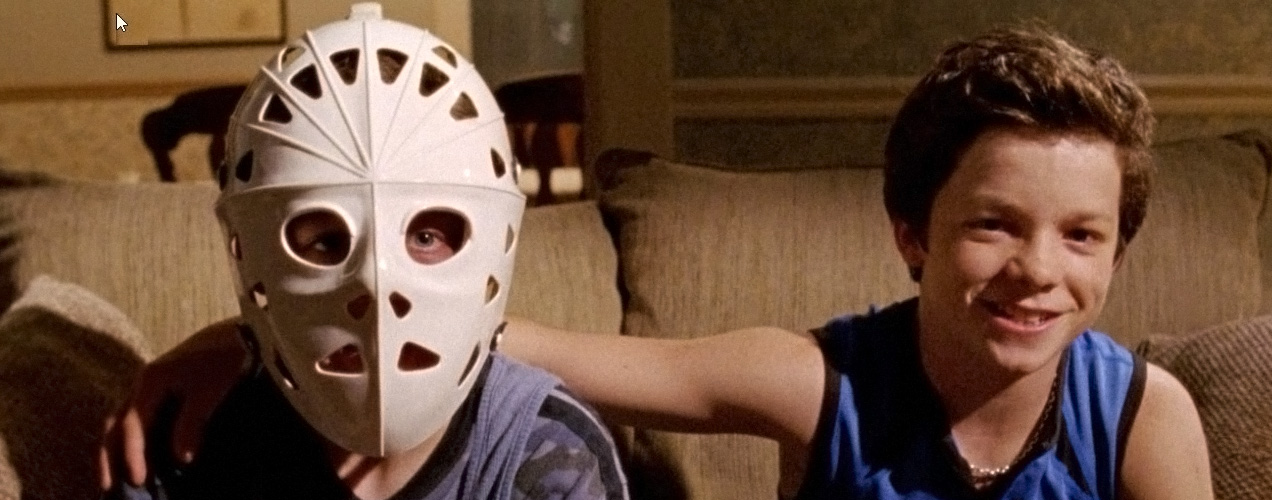
2006 / Michael Cuesta > Turning thirteen and technically becoming a teenager, that’s when the struggles of adolescence becomes official. But there are always those who hit their strides earlier due to special events that surround their lives—family, death or love, for example. In these times, a child is forced to act years in advance of their actual age, replicating what they’ve learned from those around them and on television and books. But always in this state of being precocious, it’s important to remember that they retain their naivety. That naivety is what Cuesta so very impressively portrays in Twelve and Holding. The challenge for a filmmaker with such material is never the shock factor one needs to achieve, but rather to justify its existence within the scope of the film. Cuesta’s treatment is gentle, intelligent and all the while respectful to the nuances of growing up.

Live Free or Die Hard
2007 / Len Wiseman > Die Hard films are about being in a position of impossibility. The building, the airplane—they made sense. But when Die Hard: With a Vengeance successfully moved away from that formula, the title became a bit of a misnomer. With Live Free or Die Hard, Wiseman moves even further away from the original premise, and those who remain loyal to the originals will undoubtedly be disappointed. But I’ve moved on, and this is one hell of an action-packed flick. Arguably the best summer adrenaline rush since Mission: Impossible 3, once McLane starts, he never stops (although Maggie Q almost makes that happen). Enjoy the mindlessness, don’t think too hard about the economics or the technology and let Willis help you forget that he’s 52 years old.
Knocked Up
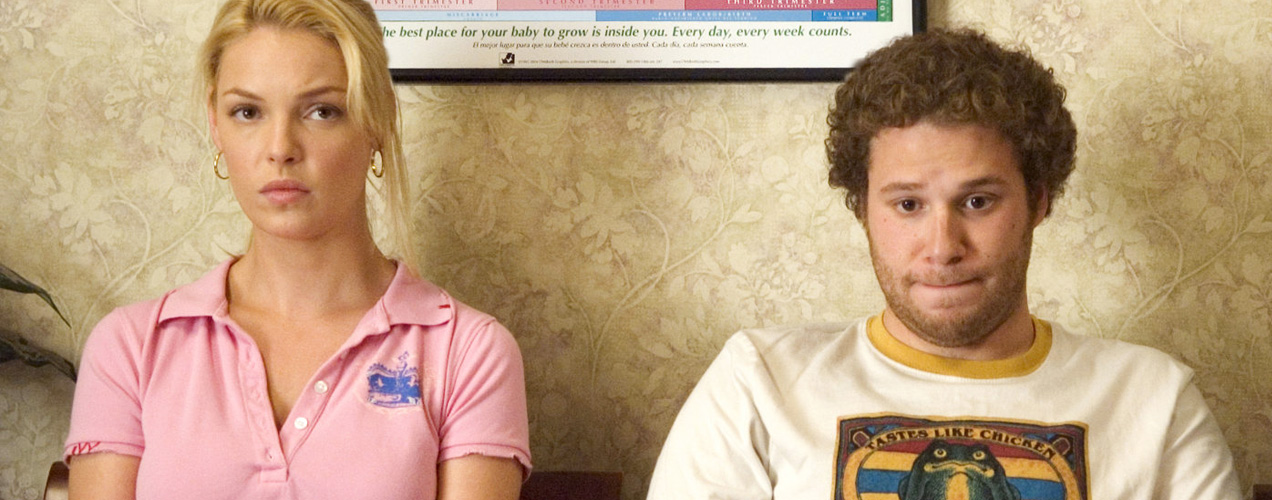
2007 / Judd Apatow > It often seems that for a film about relationships to be good, there has to be some destructive forces involved with cynicism abound. But Apatow is better than that: Judging from his work on Freaks and Geeks, where he tackled a topic of much maligned stereotypes with a level of reverence unfound elsewhere, he’s figured out how to turn common, beaten topics into constructive expositions. In Knocked Up, he successfully balances the jokes, the pop culture references (often needed to understand the nuances of the male protagonist) and the reality of an accidental pregnancy. It’s touching, it’s commendable and it’s got Matsui.
Four Eyed Monsters
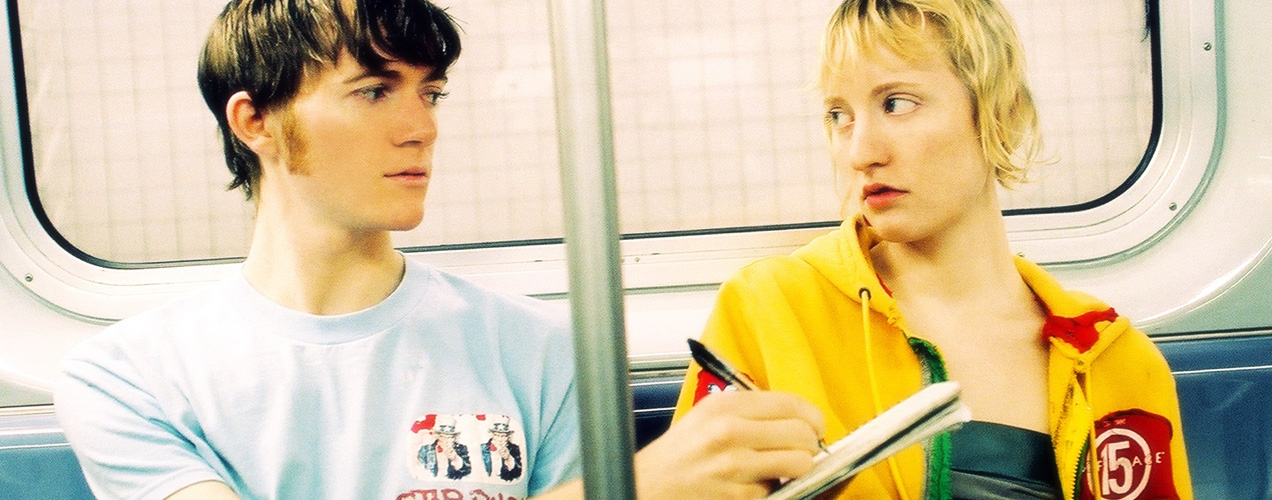
2006 / Susan Buice & Arin Crumley > I don’t deny that the intent here is of great interest: How has the world of relationships evolved with the advent of social networking for those who are still somewhat lost, especially in their twenties? And with that, it starts off quite strong. But somewhere along the way, it digresses into issues of identity that are specific to a certain demographic (of which I can’t entirely relate to). Ultimately, it’s a deeply personal film by Buice and Crumley, who also star, and one that should attract those who have a certain sense of disillusionment from urban living vs. original expectations.
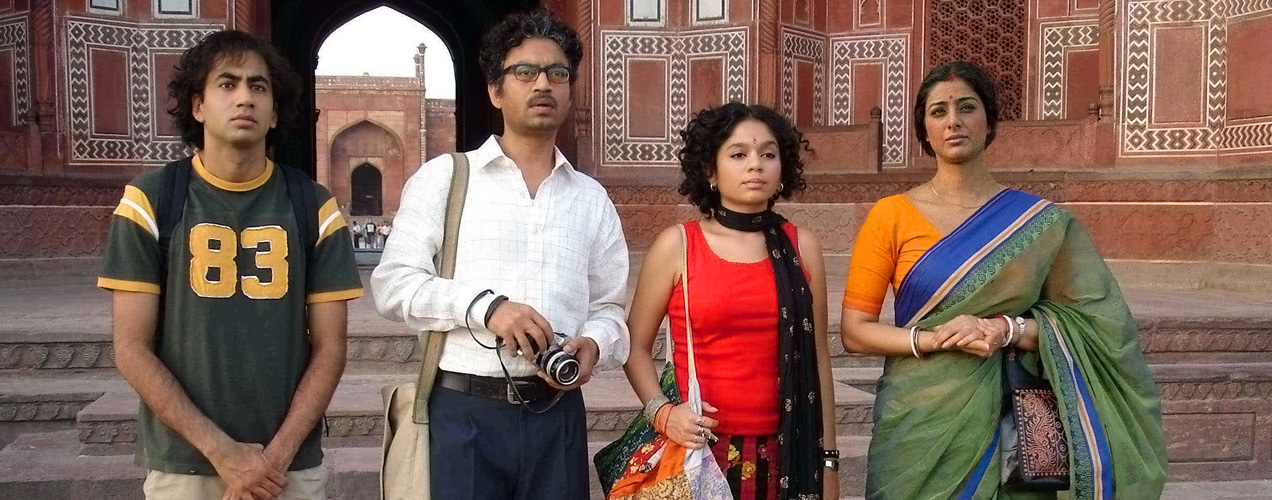
The Namesake
2007 / Mira Nair > It’s a rare thing that celluloid beats its paper foundation, but The Namesake does just that. Personally, I’ve found Jhumpa Lahiri’s writing style to be better fitting for short stories, but maybe I’m biased: The first two-thirds of the novel deal with things I’ve personally experienced, while the third is fairly uncharted territory. For that, maybe Nair’s pacing fit me better.
The film itself is graceful, respectful, ignoring the stereotypes that often plague cinema that crosses cultural boundaries (and for this, both Lahiri and Nair ought to be credited). It’s not perfect, but it has enough universal identification that it should be able to appeal to most of who have a chance to view it. The only dubious factor with the film is Kal Penn being casted for the lead role: He does a suitable job, but it’s just hard to forget that this is Kumar we’re talking about. The rest is quite appropriate, with special note to Tabu’s performance as the beautiful, maturing mother who can make or break the viewer’s heart.