

2006 / Ramin Bahrani > With a mood similar to a Hou Hsiao-Hsien film, Bahrani almost pulled off a coup of sorts here: He nails the loneliness, the colors, the feel of the city, but ultimately fails to stay true to its nature. Man Push Cart, ironically, should be called Man Pull Cart as we rarely see our protagonist push it, but that’s excusable. What’s not are the pretty girl at the newsstand and the absolutely preposterous climactic sequence. It’s a joke to someone familiar with the churns of the city, and complicates the film even if put in a metaphorical context. The potential here was enormous, but the film ended up getting carried away in its own little world with absolute disregard to the viewer.
Category Archives: United States/Canada

Shortbus
2006 / John Cameron Mitchell > Calling it experimental would be a bit of an insult: Without its explicit sex scenes, Shortbus is less novel and considerably more of the old. It’s about relationships, sex and the proper mixes that lead to comfort, themes that have persisted and evolved throughout the history of film. And Mitchell’s sense of evolution by incorporating what most of us are all familiar with in vivid detail is meant to have given us a better grasp of the lessons within.
Admittedly, though, the atmosphere here is a little quirky, and the characters in Shortbus and the eponymous gathering place are often hard to relate to. It’s easy to like the film on the surface level: It’s playful, honest and seems to treat sex in an essential but non-exploitative manner. But ultimately, I found it tough to replay the rhymes and reasons of the players without questions, without wondering the simple craziness of sequence after sequence. I imagine this is a great film for many, and in fact I’ve been surprised by the multitude of those who have enjoyed it. But it’s definitely not for everyone, especially those who may have trouble digesting some of the over-the-top scenes.

Beer League
2006 / Frank Sebastiano > One would think that a film such as this simply could not disappoint, but how wrong they would be. Really, I expected a laugh or two, but instead I felt a gnawing in my stomach in the absence of any. (Every time I snickered, though, I felt a tinge of guilt because it wasn’t really the jokes I found myself laughing at, but rather at how ridiculous it all was.) More surprising, even, is how the film didn’t go straight to DVD, considering its dismal two week outing in theatres and yet another failed comeback by the Karate Kid.
The Departed
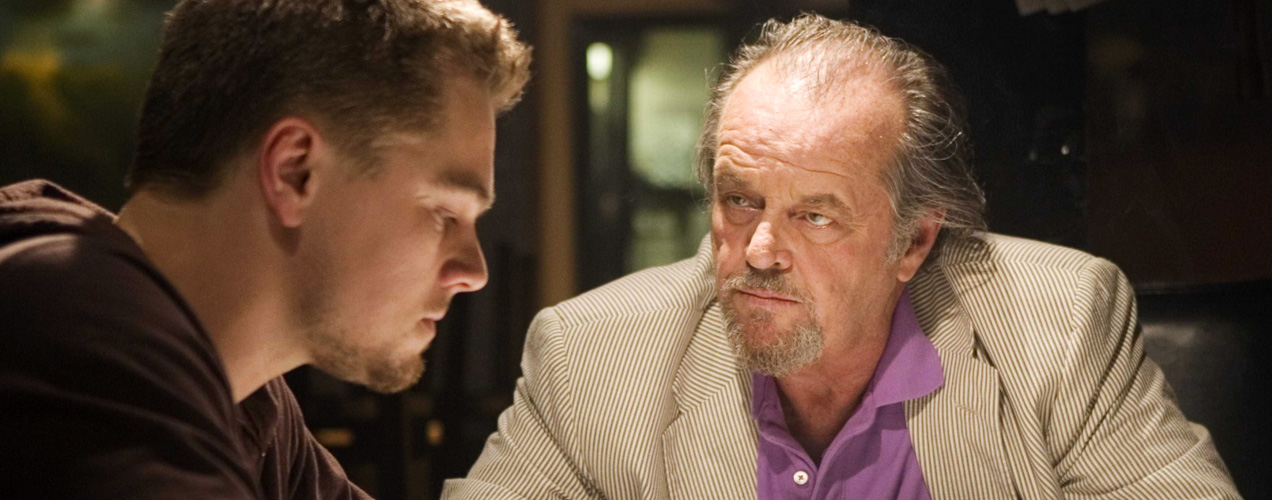
2006 / Martin Scorsese > In short, The Departed is the best American film of the year, and the best work from Scorsese since Goodfellas. Whatever qualms one may have based on their positive experience with Infernal Affairs, these should be given less gravity due to the meticulous craftsmanship that Scorsese employs in his direction. The film is not perfect (which is a common ailment for most remakes), but isn’t so mostly because of certain personal preferences. It is, however, sharply written with an incisive comic pull and drenched in objective emotion.
The cast is flawless (so much so, that the film was recently awarded Best Ensemble of the year by the National Board of Review), with Leonardo DiCaprio giving what is perhaps his finest performance to date and worthy of an Oscar nomination. Mark Wahlberg gives the film an extra edge (and definitively separates it from the original), and Vera Farmiga is a promising, if delayed, discovery. The only weak spot seemed to be Martin Sheen, but that seems to be attributable to the script’s momentary weakness rather than the actor’s own abilities.
I found it fascinating how The Departed barely felt like Infernal Affairs. While hard not to continuously compare the two, there were more than enough fresh jolts in the Scorsese venture to take my mind away from the original. But as for the inevitable question of which is better, the honest truth, however sidestepping, is that they are different films with different styles based on an underlying idea that alone could not have made these the works of art that they are.
Borat: Cultural Learnings of America for Make Benefit Glorious
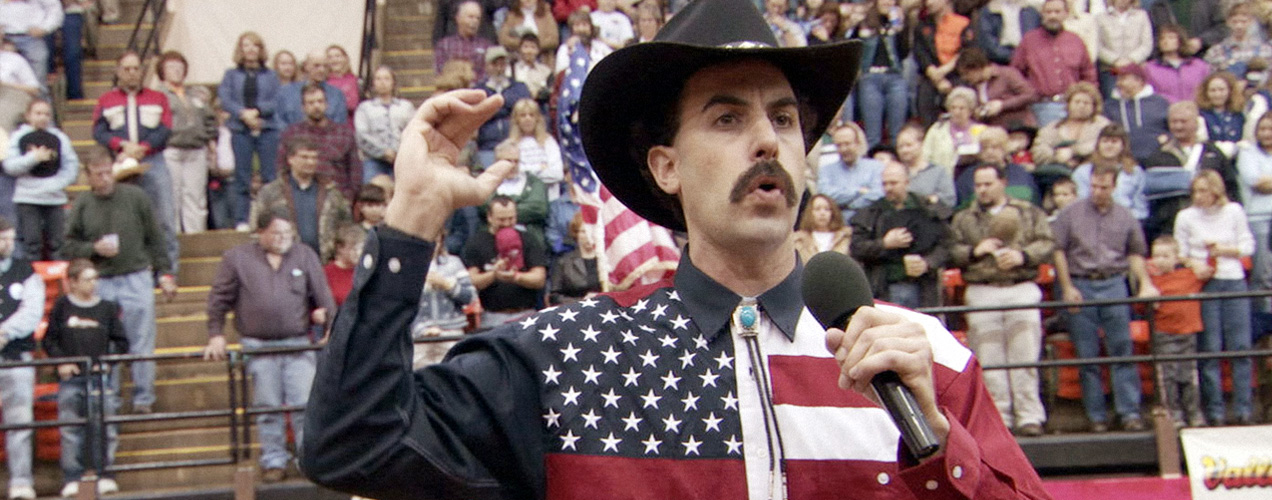
2006 / Larry Charles > So highly anticipated that it barely met expectations—which, in this case, is a very good thing. It’s hard to judge the film on its artistic merits as it’s essentially a broad practical joke on the uninformed American public (or at least those who don’t fancy a premium subscription to HBO). What sets Borat apart from its spiritual brethren Jackass is an attempt at a storyline, one that the film reasonably succeeds at. Sacha Baron Cohen has done better skits than what is presented here, but this seemingly fluid compilation of punchlines (and a few scenes that tug the heart and soul) works as the clincher. This is hands down one of the best comedies of 2006, but it remains to be seen how it stands up to the test of time.

Little Children
2006 / Todd Field > The follow-up to In the Bedroom, Little Children comes off as a mixture between Desperate Housewives (voiceover included) and Crash. There is excess in its tactics, although technically, Field keeps total and absolute control of his world. The film shifts between its central storyline and a side one, and while that can be attributed to the source material, it’s nonetheless inexcusable as it distracts from the chemistry between Kate Winslet and Patrick Wilson. Their story is a tragedy, and it’s beautiful in its process. But those around them remain miniatures of the real thing, exerting one-sided characterizations and little in terms of evolution. Unlike In the Bedroom, where the line between right and wrong was blurred, Little Children positions its characters’ actions in such a judgmental manner that its hard to swallow every bit by the end.

Lady in the Water
2006 / M. Night Shyamalan > Similar to The Fountain, Lady in the Water went through development hell before finally making its way onto the big screen. At the very least, we should respect that, and admire Shyamalan for standing by his own personal vision. However, the absurdity that is instilled in the film makes its brethren look quite sharp and educated. Shyamalan executes a sort of deus ex machina in his storytelling technique, pulling strings out of thin air to get the story to work magically. While it’s meant to be a fairy tale in itself, it discredits the traditional fairy tale by taking the suspense and initial disbelief out of all that is wondrous. By the end, little seems to have been gained from the adventure, and we find ourselves idling away, connecting dots that have already been numbered. Viewers are not this passive.

Kids
1995 / Larry Clark > Not nearly as controversial and horrific as its reputation would have one believe, Kids is surprisingly credible and straightforward about its subject matter. The so-called exploitation of teenagers in the film is unfounded, and instead Clark’s portrayal is dauntingly honest, if slightly sensationalist. The cast is perfect, natural. Chloe Sevigny shows off skillset opposite of the tragic Justin Pierce and newly resurgent Leo Fitzpatrick. Moreover, it’s amazing to think that was actually Rosario Dawson. It’s definitely a film that gels in the subconscious after time expires, but has the unfortunate effect of making one feel a little guilty, even ill, that there is so much truth present.

The Fountain
2006 / Darren Aronofsky > It’s pretty, and the music’s not bad either. But how much validity there is in Aronosky’s interpretation of love and death, I’m not sure. I found myself quite bored and annoyed at the lack of any real tangible concept in The Fountain. What Aronofsky’s trying to say is there at the tip of his tongue, but it never comes out as it should. Many have commented that the film is for the deeply intelligent thinker, but I would argue that they may be deluding themselves into believing a rather self-important piece of work that’s force-fed via the glowing face of Rachel Weisz and bald head of Hugh Jackman. While Aronofsky should be commended for standing by his labor of love, it does not excuse the film’s excesses. The remainder is filled with style, repetition and naive philosophies that fail to support the initial premise.
Beerfest
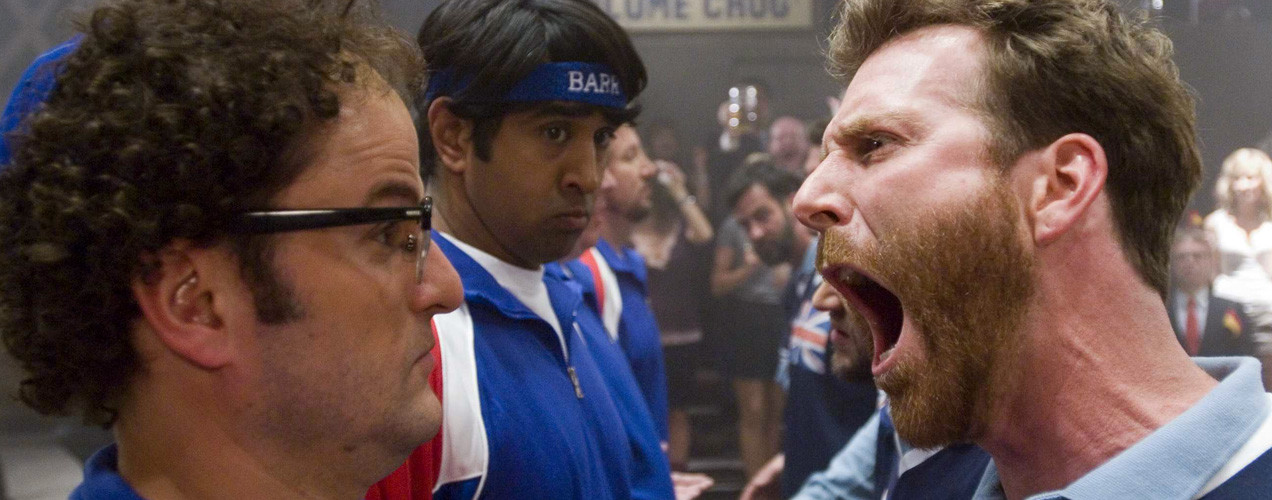
2006 / Jay Chandrasekhar > After their hilarious misadventures in Super Troopers, I’ve come to expect a decent amount from the troupe at Broken Lizard. And while Beerfest is only a slight step above the somewhat misguided slashfest Club Dread, it still delivers on the basics of what it promises: beer, breasts and (male) bonding. What it lacks compared to its cops-brethren is a formidable opponent, without which a comedy of this styling can fall pretty flat. So, while Beerfest has the necessary ingredients for success, its mentally-diminutive German foes keep the film from holding its liquor until the very end.