
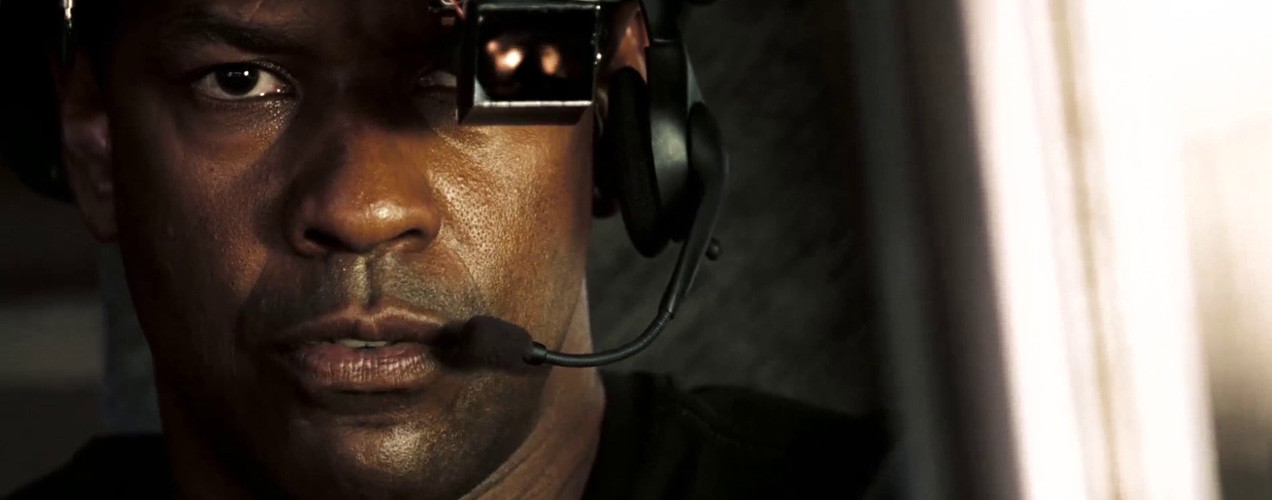
2006 / Tony Scott > For a film that deals with folding the time-space continuum, there is great irony in its predictability. But there is credit to be given to Tony Scott for getting off the speed and rejoining the human race after the dismal Domino. The sober and tactical directing of Man on Fire is nearly back, but with an unusual dose of science fiction thrown in. More specifically, the Hummer on the highway is arguably one of the finest science fiction/action sequences ever put on film. If only that level of imagination were present throughout, it would have been a considerably more memorable adventure, plot holes or not.
Category Archives: United States/Canada

The Break-Up
2006 / Peyton Reed > Both Hollywood and the independent film market have generally been a little less than successful in dissecting relationships without pretension. Recent ventures Closer, Prime and the Korean Rules of Dating have been considerably more successful by taking a more mature perspective. While a valiant effort in the same vein, the problem with The Break-Up is its failure in keeping a straight face by delving into cheap laughs. Maybe this is an issue with the casting of Vince Vaughn, whose nature is befitting of such humor, but unfortunately it creates a lack of focus that slows the film down. Not only is the humor often forced, but the film also becomes predictable in its obstacles. The idea is there, the overall execution is good but some of the meat, in the end, is quite rotten and should be excised.
Babel
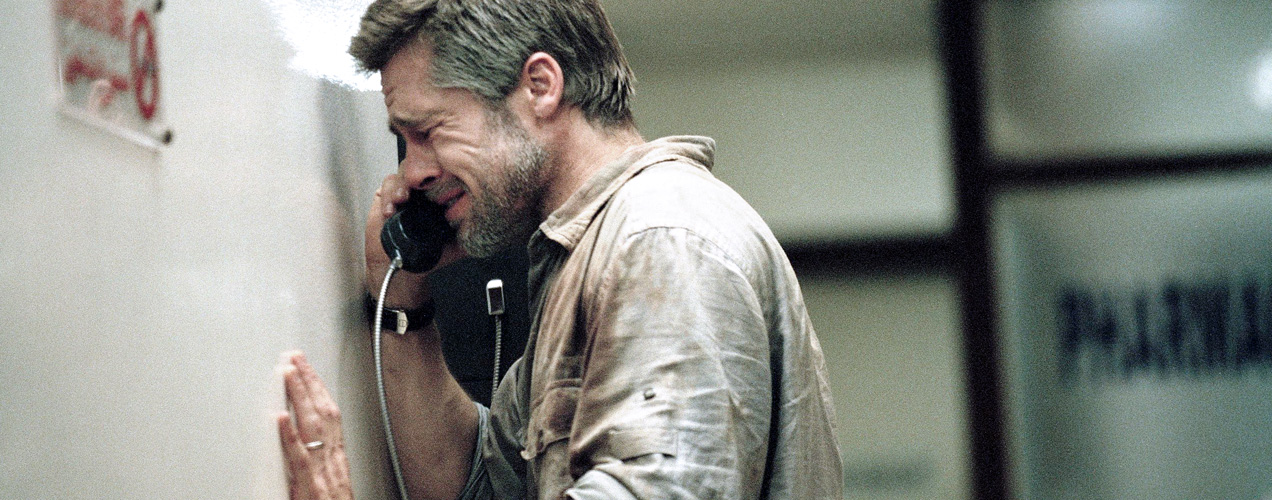
2006 / Alejandro Gonzalez Inarritu > Babel is an unfortunate failure on many parts: Samuel L. Jackson’s now-infamous “Crash Benetton” comment at Cannes is one of the simplest yet most accurate depictions of this film. It reeks of a lazily contrived storyline, hellbent on deriving some sort of bigger meaning through mishaps and the obvious. Wherein Amores Perros tried to be an objective narrator, Babel instead chooses to manipulate the action to the conclusion it sees fit. Of the four storylines, only the Japanese one holds a sense of legitimacy: It’s raw, driven with emotion and mystery and is ultimately utilized as a stopgap measure on the remainder of the mess.
The film is beautiful: For Rodrigo Prieto’s cinematography, one would hope that he gets another Oscar nod after last year’s unsuccessful bid with Brokeback Mountain. Undoubtedly, the two best performances of the film come from Adriana Barraza as the Mexican caretaker of Pitt’s children, and Rinko Kikuchi’s deaf-mute Japanese schoolgirl in need of male attention. The latter, especially, is a bewildering success, even stealing the limelight from veteran Japanese actor Koji Yakusho’s subtle and masterful acting. This is also Gael Garcia Bernal’s weakest to date.
To say the least, this worries me about Inarritu. Sadly, he reminds me of the path Guy Ritchie has taken, in constantly repeating an initially successful technique until it’s so over the top that it just loses all credibility (see Revolver). It will be good to see him pair up with a writer other than Guillermo Arriaga, who seems to be quite busy on his own these days after his falling out with Inarritu over the authorship of 21 Grams. The potential herein was immense, with a global concept that, to my knowledge, has never been attempted. Too bad, then, that it falls into its own trap, filled with cliches and one-sided social commentary on what, exactly, we’re not even sure.

Casino Royale
2006 / Martin Campbell > Casino Royale is the best Bond film since 1969’s On Her Majesty’s Secret Service. It has style, grit, heart and a story that actually works. All too often, I’ve found my attention fading by the 7th inning stretch. Chases and shootouts mean considerably less if there’s no plausible reason behind them. And by plausible, it’s not just how it affects the global power paradigm, of the good versus the bad, but rather how humane and reasonable the motivations are. And while I’m not a fan of Paul Haggis, maybe it was his screenwriting touch that made this happen. (One could probably argue that the subject matter kept his heavy-handedness in check, and if that’s true, I do look forward to him working on the next Bond film.)
As for Daniel Craig, the man is not Sean Connery. And that is exactly why he works. While Clive Owen would have been my first choice for Brosnan’s replacement, Craig has shown that he fits the bill, much like the tailored suit that Vesper Lynd prepares for him. His youth reflects appropriately in what is the beginning of 007. The screenplay supports him throughout, offering us more insight into his character than ever before. Eva Green is nearly perfect as Vesper Lynd, and arguably the best and most complex Bond girl since Jane Seymour’s Solitaire in Live and Let Die. Her onscreen chemistry with Craig is one of the key reasons the film works so well.
Casino Royale has me more excited about the future of James Bond than I’ve ever been. The style seems to be going the right direction, Daniel Craig is an excellent fit and they’ve finally taken to writing a properly thought-out script. It would be wonderful to see an arch-nemesis of sorts, similar to Blofeld, as well as further background on Bond himself. Either way, the next Bond, rumored to be a loose continuation of Casino Royale, is now on my calendar for 2008.
Children of Men
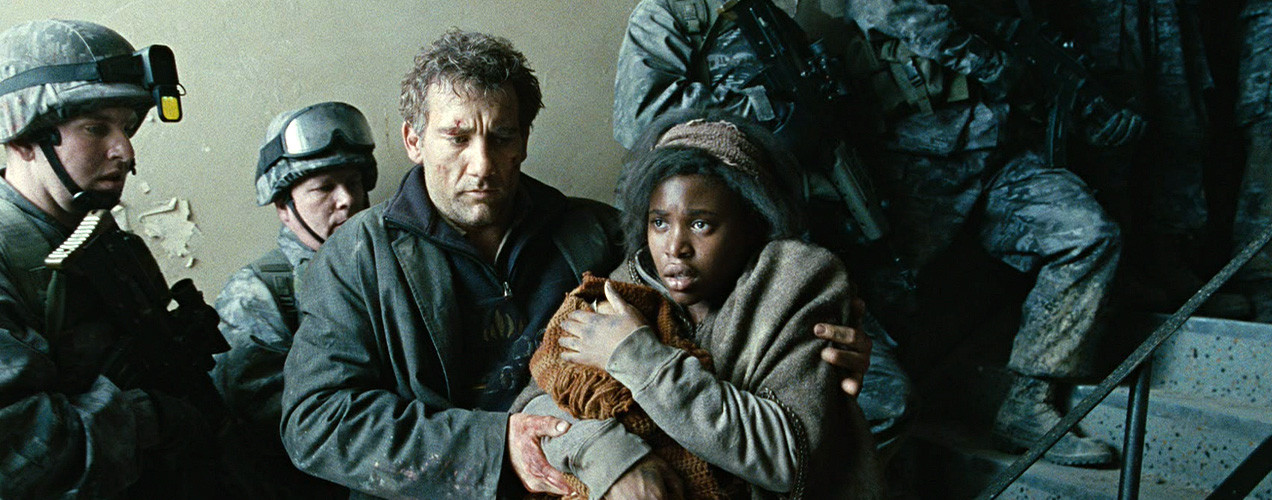
2006 / Alfonso Cuaron > Visually apt, Children of Men has some great sequences that keeps its dystopian world interesting, but the details are amiss. It’s unfortunate that Cuaron seems to have stripped away most of the novel’s intricate storyline, leaving a mostly superficial journey filled with one-sided social commentary and a large empty hole where there could have been substance. It’s especially shocking how weak the dialogue is, often spelling out the obvious to the viewer. Thankfully, Owen is solid, especially considering how little he had to work with.

12 Angry Men
1957 / Sidney Lumet > An incredible cast led by the late Henry Fonda is undoubtedly the best reason to watch the original 12 Angry Men, a film that may feel outdated on the basis of its arguments. Similar to Rififi, it’s interesting to see screenwriter Reginald Rose’s systematic dissection of a jury’s decision-making process in the days before television shows like CSI and Law & Order. The point is not the final answer, but rather how things come to be. But for 12 Angry Men, it just feels a little too easy. It’s almost successful, conversely, as a tightly packed social commentary under the veil of a drama, but feels like it misses its target due to a storyline that seems contrived for the protagonist’s obvious benefit.
Miami Vice
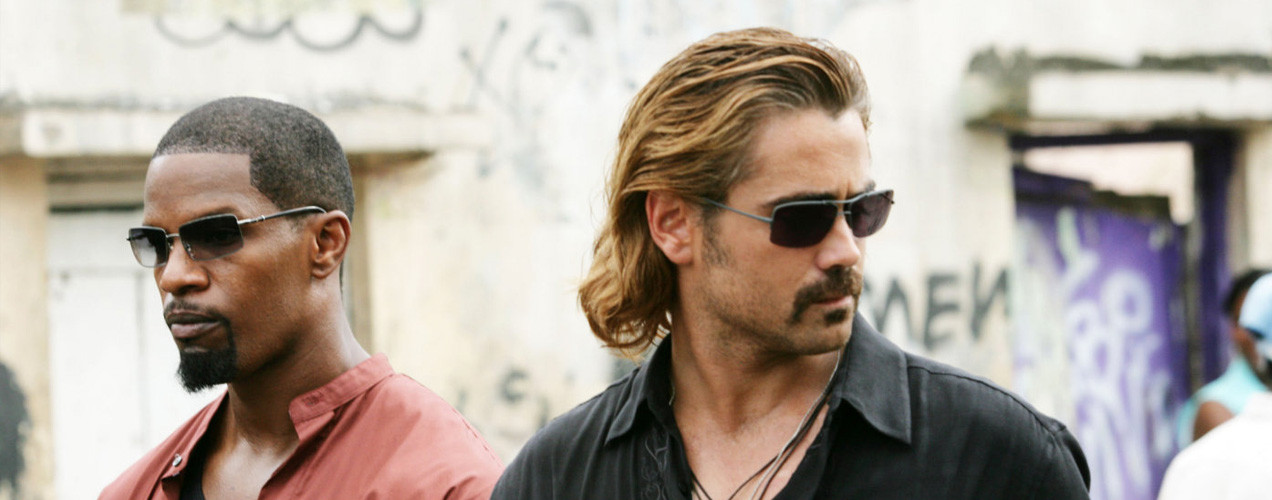
2006 / Michael Mann > Dreadful, monotonous and an underwhelming disappointment. Having expectations for a Michael Mann film is a bad idea, since living up to the standards he set with Heat and The Insider are a little unfair. But I was hoping the re-imagination of Miami Vice and the mainstream debut of Gong Li would be reason enough to keep me interested. But unfortunately the music, cinematography and the presence of Ms. Li is not enough to save the disjointed, unnecessarily contrived plot line from caving into its own back.

Marie Antoinette
2006 / Sofia Coppola > After everything, there’s just something, however minute, missing from Marie Antoinette for it to become the rich and evocative biopic that Coppola must have intended. It could have been a different ending, better pacing or simply the addition or deletion of a storyline. But as it stands, the film is far more memorable for its dresses of grandeur, the decadence of the Rococo and Kirsten Dunst’s performance in a role that very much becomes her. (Which, effectively, makes up for her being atrociously cast in Elizabethtown.)
There is a scene early on in the film where Dunst first wakes up at Versailles only to find a troupe of women and men at her servitude. In the following minutes where she is dressed, Coppola somehow manages to define the reasoning behind the French Revolution. For me, it stands as the defining moment in the film where she so subtly argues for and justifies the revolution. But what if one asks, “What is this film trying to say?” Coppola’s intention is unclear: Are we to understand the aristocratic idiocy of the period, or focus on the girl in the center and try to empathize with her as a person, not as the Queen of France?
But letting such lack of clarity slide, it’s hard to imagine not enjoying the anachronistic usage of modern music (particularly Aphex Twin’s “Jynweythek Ylow” and Bow Wow Wow’s “Candy”) and the sheer jubilance Dunst’s smile evokes. Using all that is style, Coppola did succeed in making me feel for Marie-Antoinette’s predicament. The fusion of style and substance is a little skewed toward the former, but this is ultimately a film for the heart, not the mind. It is as imperfect and naive as Marie-Antoinette herself.
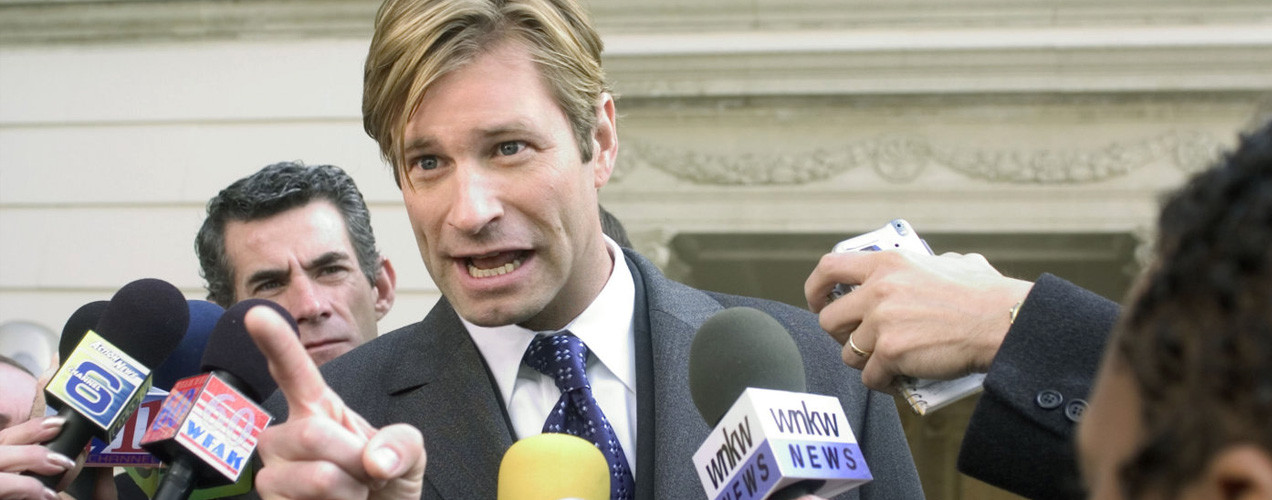
Thank You For Smoking
2006 / Jason Reitman > Even though his father hasn’t done anything respectable in a decade, Jason Reitman certainly has—on his first try, no less. Reitman’s sobering yet insanely objective view of a tobacco lobbyist (played superbly by Aaron Eckhart) is a much needed breath of fresh air from Hollywood. Recently, there’s been a barrage of weak, simply blasphemous liberal propaganda films that preach in a contrived, heavy-handed way (and while some of you may not include Crash in this, I certainly do). Thank You For Smoking takes a step back and billows out a smokescreen through which we identify with the human side of the tobacco industry while being repulsed at the same time.

American Dreamz
2006 / Paul Weitz > I expected more from the director of About a Boy: After all, Weitz should have been capable of a well-done, imaginative satire on the state of today’s media. But American Dreamz basically ends up engulfing itself in several layers of useless satire that render it cliche’d and predictable. The irony here is that the message of the film—a mockery of American Idol and our government—gets lost in the silliness that ensues. The subtlety of Weitz’ previous films (including American Pie) is completely lost here, as is the film’s potential charm.