
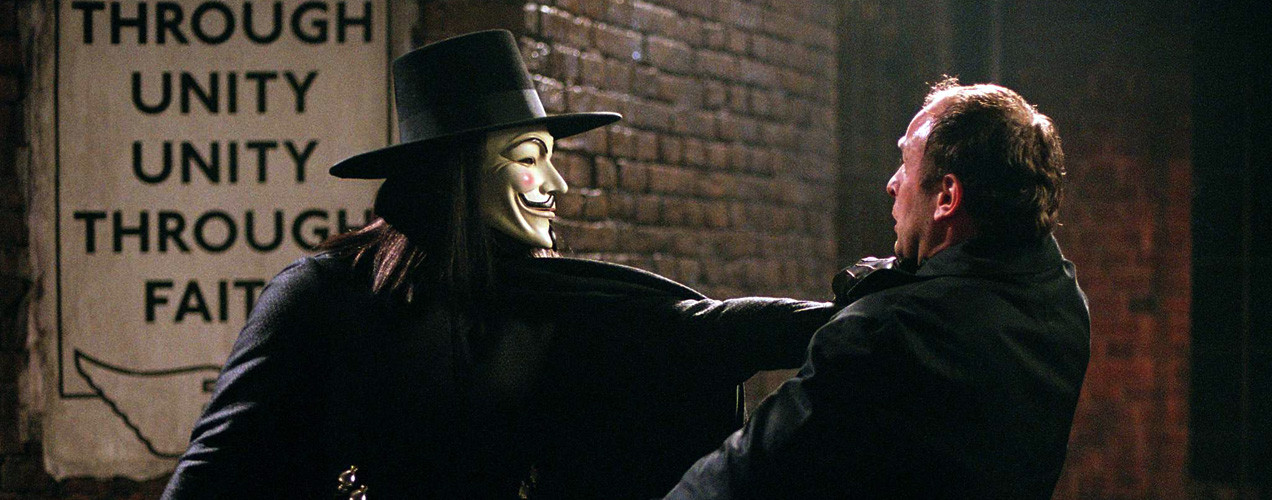
2006 / James McTeigue > I generally tend to like 1984-esque storylines, especially when done with such high production value on multiple fronts (i.e., not Equilibrium, which wasted both Bale and Watson’s acting talent). V, fortunately, was good at worst on most fronts, but fairly disappointing due to the not-too-subtle liberal ideologies that permeate it. Yes, I understand this was written to criticize Margaret Thatcher, not George W. Bush, but the comparisons, in this day and age, are absolutely inevitable. And while there are amazing possibilities in fusing social commentary with entertainment, V fails primarily because the story becomes so one-sided that it loses its credibility as time goes on. Thankfully, if you can turn a blind eye to its hard-handedness, the film does stand well on its own as bonafide, if fleeting, entertainment.

Lucky Number Slevin
2006 / Paul McGuigan > I’m not sure why I’ve heard so many complaints about this film “tricking” the viewer, since it was fairly obvious from the opening sequence that something fishy was going on. But as I let myself delve into the fantasyworld that was occupied by a very revived Josh Hartnett, I found time slipping past me. Well edited with gorgeous cinematography, Lucky Number Slevin is hands down the biggest surprise (on the upside) I’ve had in a film this year. This is not for those who always want to know what’s going on, but perfect for those willing to give in and indulge what the new Hollywood has to offer. A perfect antithesis to megabores such as Poseidon, LSL is definitely worth a watch for its creativity and no-nonsense mindset.

Brick
2006 / Rian Johnson > Impressive is Johnson’s ability to supplant the world of old noir-like films (a la The Maltese Falcon or North by Northwest) into a modern-day, high school setting. The dialogue is supercrisp to the point where it took me a minute to adjust to its speed and complexity. Joseph Gordon-Levitt continues to impress, following up his tremendous performance in Myterious Skin. While the setup is solid, the execution flounders at times due to somewhat lack of proper pacing. Overall, the film is still a treat even if it taxes your interest here and then.

Mission: Impossible 3
2006 / J.J. Abrams > This is the most fun I’ve had while watching a film this year. Entertaining from beginning to end. Better than the first two, and definitely more faithful to the television series as well. Aside from some absolute lameness (i.e., the trite plot that mirrors anti-Bush sentiments), I enjoyed this thoroughly. And Maggie Q is going to fucking blow up in this country.
The Customer is Always Right
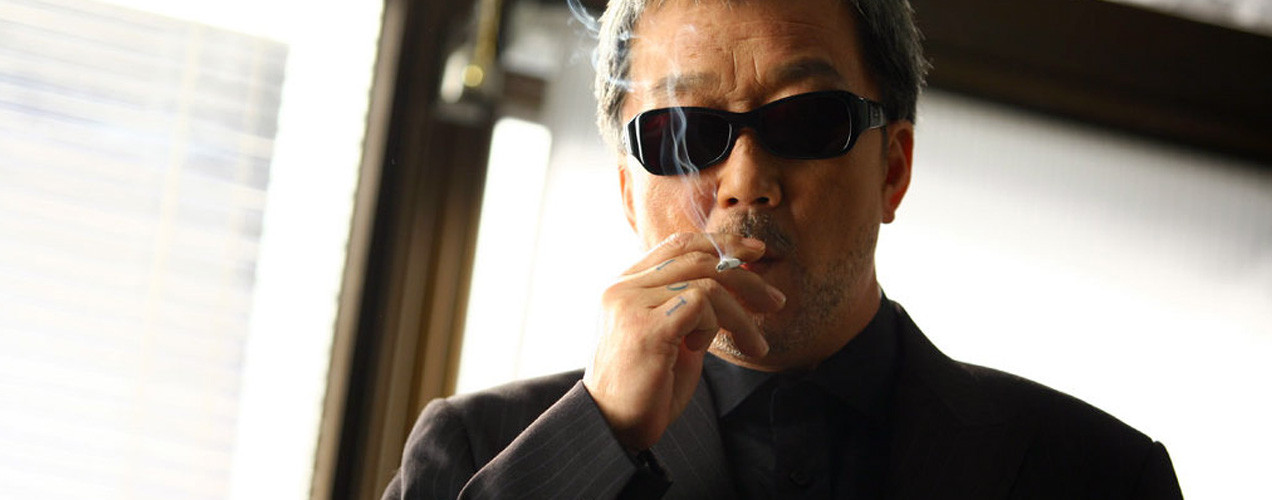
2006 / Oh Ki-hyun > There’s a very interesting concept hidden in this otherwise cliche’d film about blackmail. In a way it’s a gimmick, but one that could be utilized to perfection by a director with a different approach. Moreover, don’t avoid watching this film because of its posters: They’re deceivingly comic and unfitting to the feel and sense of the film.

Scary Movie 4
2006 / David Zucker > What’s fascinating about a film such as this is that I’ll end up idly watching it, as will the rest of America. This is not so much a film (it’s really not) as it is a character study on the audience: Why do we watch it? Do we actually find it funny? What are our expectations entering the theatre? Aside from the fairly amusing Dr. Phil and Shaquille O’Neal meets Saw introduction, this goes downhill below sea level. Spare yourself and stop at the first Scary Movie, which at least had the saving grace of Carmen Electra’s implants out in the air.
Howl’s Moving Castle
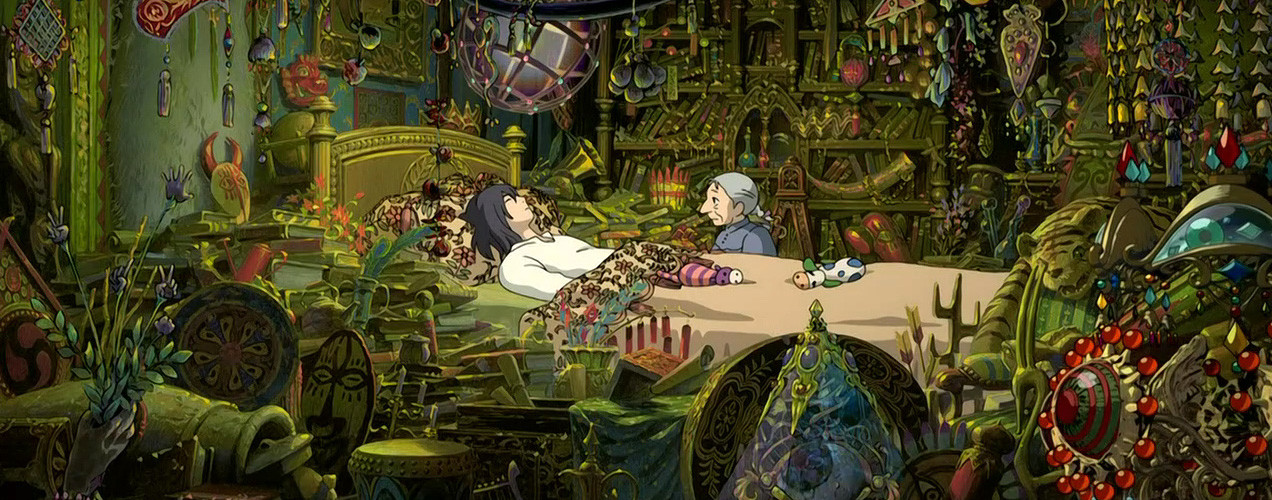
2004 / Hayao Miyazaki > I had high expectations for the next Miyazaki project after Spirited Away, which ranks as my favorite animated film of all time, and fortunately Howl’s Moving Castle does not disappoint. Unfortunately, however, it fails to surpass the near perfection of its predecessor.
The strengths are all understandable: A decently complex, unpredictable storyline dealing with fastastic elements that get your inner child all worked up while wooing and pleasing your ADD-exceling, older self. The characters are imaginative, and the animation is vivid.
But the flaws, in the end, pull it back and make it ultimately less memorable than most of his other work. Much of the last third of the film felt rushed, the storyline often felt unclear and confusing, and it seems mostly that unless you know the story it’s based on, there is too much left for interpretation that really shouldn’t be. In theory, the only qualifying statement here is that Disney did an incredibly subpar job in coherently doing the English subs, and if that is true, it’s a pity.

Everything Is Illuminated
2005 / Liev Schreiber > I didn’t read Jonathan Safran Foer’s novel, on whose fictionalized real-life experience this film is based. And although both Liev Schreiber’s directorial debut as well as the the primary narrator Alex ‘s choice of words (“Many girls want to be carnal with me because I’m such a premium dancer!) both intrigued me, the catalyst for me to watch it was Matthew Libatique’s cinematography. As expected, therefore, the film is absolutely gorgeous which a few memorable scenes (including the top-down views of Alex’s bedroom at the beginning and bathroom at the end).
The story is interesting as a Jewish-American returns to Ukraine to find the woman who saved his grandfather’s life from the Nazis, and in this journey, he and his guides discover their past. The ending is arguably too ideal, too cheesy, too clean but nevertheless still above par. I look forward to more work from Schreiber.
Paradise Now
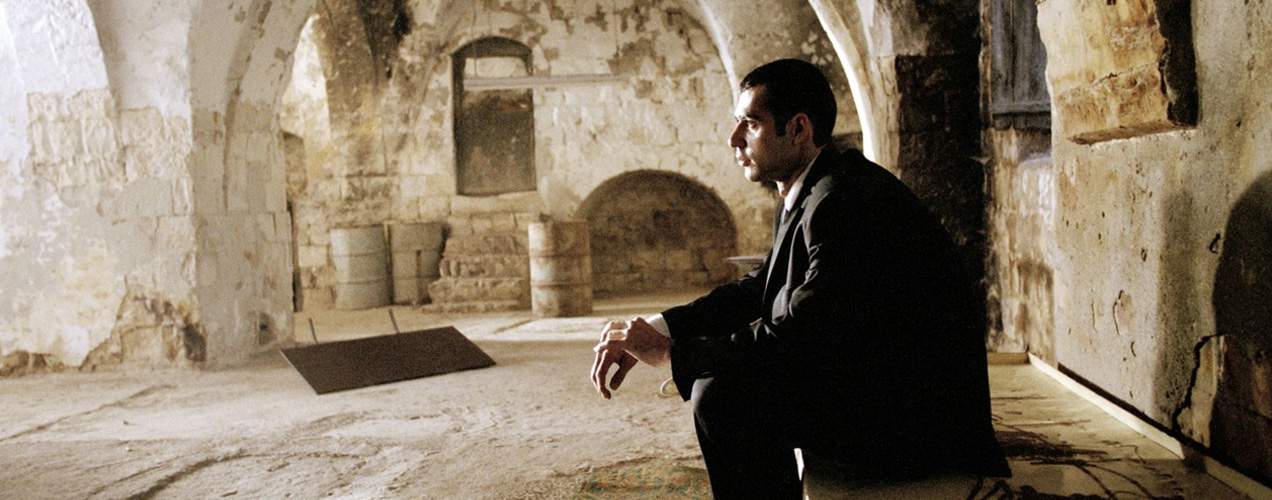
2005 / Hany Abu-Assad > Paradise Now’s strength is its ability to examine the psyche of a suicide bomber without relying on any violence. Abu-Assad chooses, interestingly, not to deal with the background of the conflict, but to create circumstances in which Said, the protagonist, finds himself questioning or amplifying his motives. Most of those around him act as fodder, but not until later in the film do we see Said personally account his reasons for becoming a suicide bomber.
The film is well paced and has a few great moments (e.g., after Said videotapes his goodbye speech to his family, the cameraman tells him that it didn’t record properly). The ending is well done and left for interpretation. One could make a good argument that if the movie was any longer or more in-depth, it would lose a lot of the simple flair that it exhibits. Most importantly, Abu-Assad doesn’t choose sides and doesn’t stereotype, thereby enhancing the credibility and universality of the film.

Lilya 4-Ever
2002 / Lukas Moodysson > Although the film kept my attention throughout, it’s hard to say how much was that because I actually enjoyed the story vs. how much I wanted to see what bad thing would next happen to our protagonist, a 16 year-old girl from Estonia whose mother leaves her for greener pastures in America. The whole film has the “whatever can go wrong, will go wrong” feel to it, which is fine and dandy as long as it’s realistic. Unfortunately, in Lilya 4-Ever, it is realistic, and thus ends up creating a rather dark and depressing atmosphere for nearly two hours.
This is my first Moodysson film, and it delivers on quality. The storytelling isn’t amazing, but by the end of the film we definitely feel for Lilya in her struggles, but at the same time wonder if she tried hard enough to make her life better. That questioning of the protagonist is the strongest point of the film, as usually we are quick to say that those who surround our protagonist are the culprits. Here, we are viewing a naive girl who lacks proper judgment, a flaw that is necessary for the poignancy the film tries to deliver.